Home remodel planning
Close a remodel with a usable record of work and open items
Reconcile the agreed scope, installed products and outstanding questions without replacing technical review.
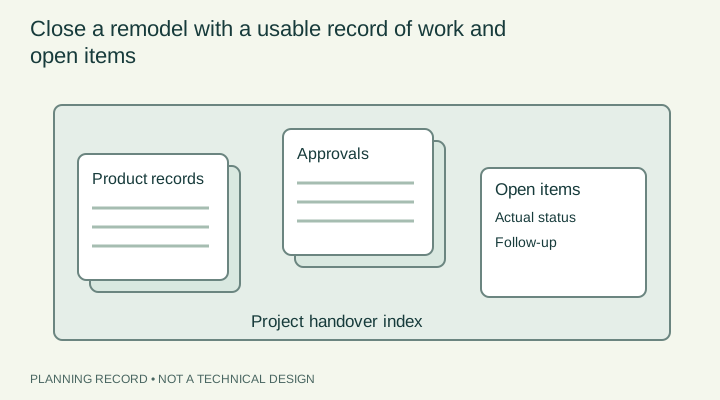
Walk through the accepted scope and revisions
Bring the accepted proposal, authorized changes and current product list to the closeout review. Check each scope item against what was supplied and installed, recording the location and status. Separate incomplete finish work from questions about operation or technical performance. A homeowner observation is valuable, but it is not the same as a trade inspection or professional acceptance.
Ask the contractor to respond to the outstanding-item list with responsibility and the proposed next step. Keep the list dated and preserve later updates. Do not silently mark an item complete because the room looks finished, and do not convert a minor appearance concern into a technical diagnosis without the appropriate review.
Reference context: Home renovations — Office of Consumer Affairs
Collect documents that belong to this project
Request the applicable permit and inspection records, approved revisions, product model information, operating instructions and warranty documents. Confirm which records are expected for the actual local scope. Calgary and Toronto permit examples can help frame questions only for those municipalities; they do not determine every Canadian project's closeout requirements.
Keep the documents identifiable by room, system or product. Record who supplied them and when. If a document is missing, identify the responsible contact and its status. A generic warranty brochure or an unlabelled approval from earlier work should not be treated as evidence for the current installation.
Reference context: Home renovations and basements — City of Calgary · When do I need a building permit? — City of Toronto
Reconcile allowances, changes and the final account
Compare the final account with the accepted scope, written changes and documented product selections. Use entered amounts and clearly stated currency and tax assumptions. Separate the product allowance difference from associated work or other adjustments. Calculation results organize the account; they do not decide a legal entitlement, lien issue or disputed change.
Where a line differs, ask for its description and supporting document before resolving it. Provincial contract and consumer rules vary, so seek guidance for the property's location rather than adopting a payment rule from another province. Preserve unresolved items and the parties' responses instead of forcing the record to show a zero balance.
Reference context: Home renovations — Office of Consumer Affairs · Your rights when starting home renovations or repairs — Government of Ontario · Hiring a contractor — Government of Alberta
Prepare a record for future use
Save final drawings or labelled records available from the project, product instructions and contact details for the parties actually involved. Note maintenance advice supplied by manufacturers or responsible professionals, keeping it distinct from homeowner assumptions. Record remaining investigations and any limitations stated in inspection or assessment documents.
Finish with a concise handover: completed scope, changed selections, records received, open items and who is following up. Avoid declaring the entire property safe, code compliant or defect-free from this review. A useful closeout preserves enough detail for the next homeowner, contractor or reviewer to understand what was done and what still needs attention.
Reference context: Home renovations — Office of Consumer Affairs · Renovating for energy efficiency — Natural Resources Canada
PUT THE GUIDE IN CONTEXT